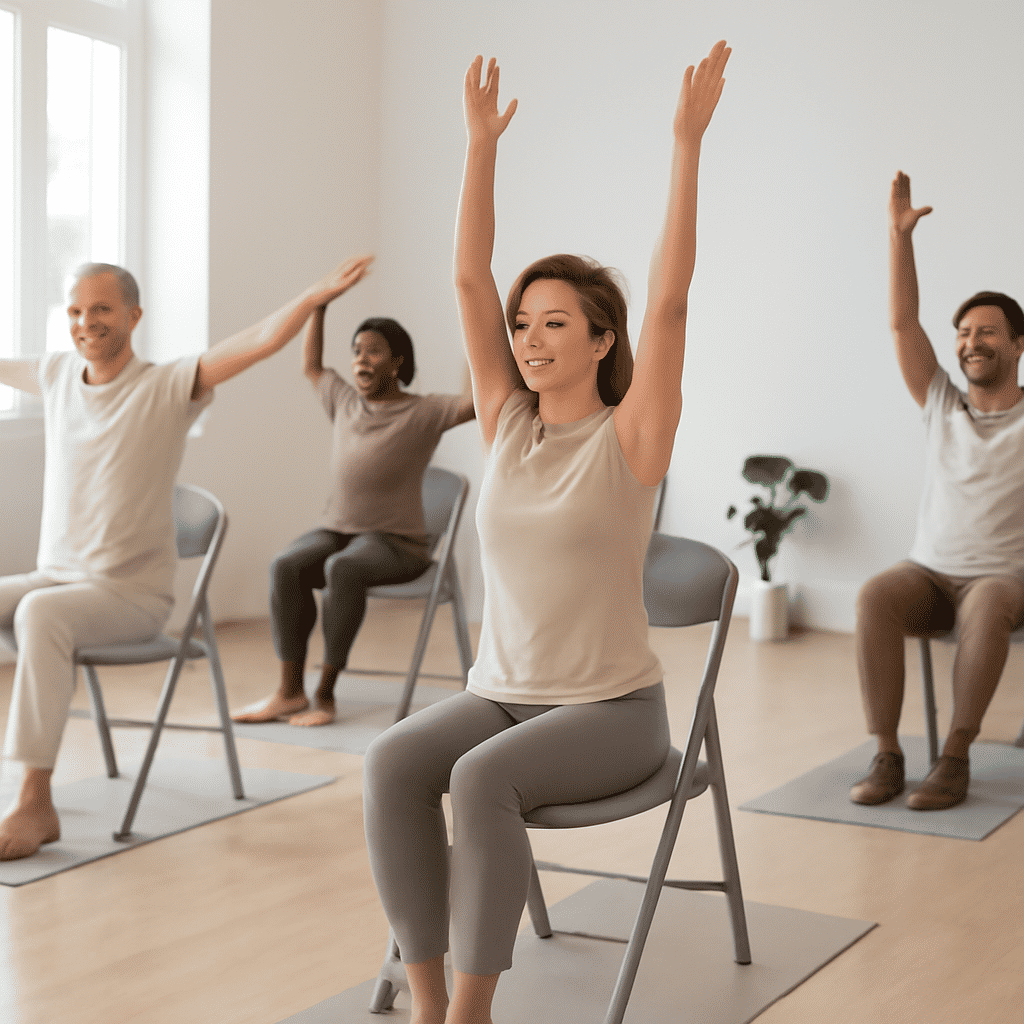
Chair yoga has emerged as a versatile and accessible form of exercise that caters to individuals of all ages and abilities. Designed to offer the benefits of regular yoga practice using the support of a chair, this form of yoga allows people who might face challenges with traditional yoga poses to still participate in a fulfilling physical and mental practice.
One of the key advantages of chair yoga is its inclusivity. For seniors, individuals with limited mobility, or those recovering from injury, chair yoga provides a safe and stable environment to engage in physical activities. It focuses on gentle stretching, strengthening, and balance, all while utilizing the support of a chair to minimize the risk of injury. This makes chair yoga an excellent way to introduce movement and exercise into the daily routine of individuals who might otherwise be hesitant.
Chair yoga classes typically involve a series of poses that can be done while seated or standing next to the chair for additional support. The movements are usually slow and deliberate, prioritizing the alignment of the body and synchronized breathing. A session might include gentle twists, forward bends, and neck stretches, each designed to enhance flexibility and promote relaxation. In addition, balance poses, like a supported tree pose, can help improve stability and prevent falls, a significant concern for many older adults.
Beyond physical benefits, chair yoga is a wonderful practice for mental well-being. Like traditional yoga, it incorporates mindfulness and breathwork, encouraging participants to center their thoughts and reduce stress. The meditative aspect of chair yoga helps in lowering anxiety levels, improving focus, and fostering a sense of calm. It allows individuals to connect with their bodies and minds in a holistic way, promoting a sense of overall wellness.
Additionally, chair yoga is remarkably adaptable, making it suitable for various settings such as homes, workplaces, community centers, and even during travel. For those leading a sedentary lifestyle due to work commitments, short chair yoga sessions during breaks can invigorate the body and clear the mind, boosting productivity and creativity. It’s an excellent way to counteract the negative effects of prolonged sitting, such as back pain and poor posture.
For beginners, chair yoga serves as an inviting gateway into the world of yoga. It removes the intimidation factor often associated with complicated poses and intense sessions, offering instead a welcoming, gentle approach that meets individuals at their level of comfort. With guidance from experienced instructors, participants can gradually build confidence, perhaps even progressing to more traditional yoga practices if they wish.
The adaptability of chair yoga also means that it can be customized to address specific needs. For instance, specific sequences can be tailored to target arthritis relief, enhance muscle tone, or even focus on breath control for better respiratory health. This customization ensures that every participant can gain the most benefit from their practice, regardless of their starting point.
In conclusion, chair yoga is a powerful tool for promoting health and wellness that is accessible to everyone. Its gentle yet effective approach breaks down barriers to traditional exercise, providing all individuals with the opportunity to experience the transformative benefits of yoga. By incorporating chair yoga into daily life, anyone can embark on a journey toward better physical health and emotional well-being, proving that yoga truly is for everyone.